Pack · 9 talks · 2h 42m to watch, 52 min to read

Benchmarks worth trusting

A benchmark can rank models cleanly while rewarding the wrong work. Tests reject correct code, public answers leak into agent runs, and a passing patch can hide a route no engineer would accept. These talks first take the score apart, separating model ability from weak questions and asking whether the task set covers work that matters. Coding benchmarks then supply the harder proof: original or recent repository tasks, executable environments, behavioral checks and defenses against agents probing the verifier. Longer horizons widen the problem. Vending-Bench reveals bad habits that emerge under business incentives, while ARC-AGI-3 tests whether an agent can learn hidden rules instead of retrieving a familiar answer. Both make shortcuts harder than another decimal place on a leaderboard would.

2
Alejandro Vidal, Mindmakers · 23:35 · AI Engineer World's Fair 2026
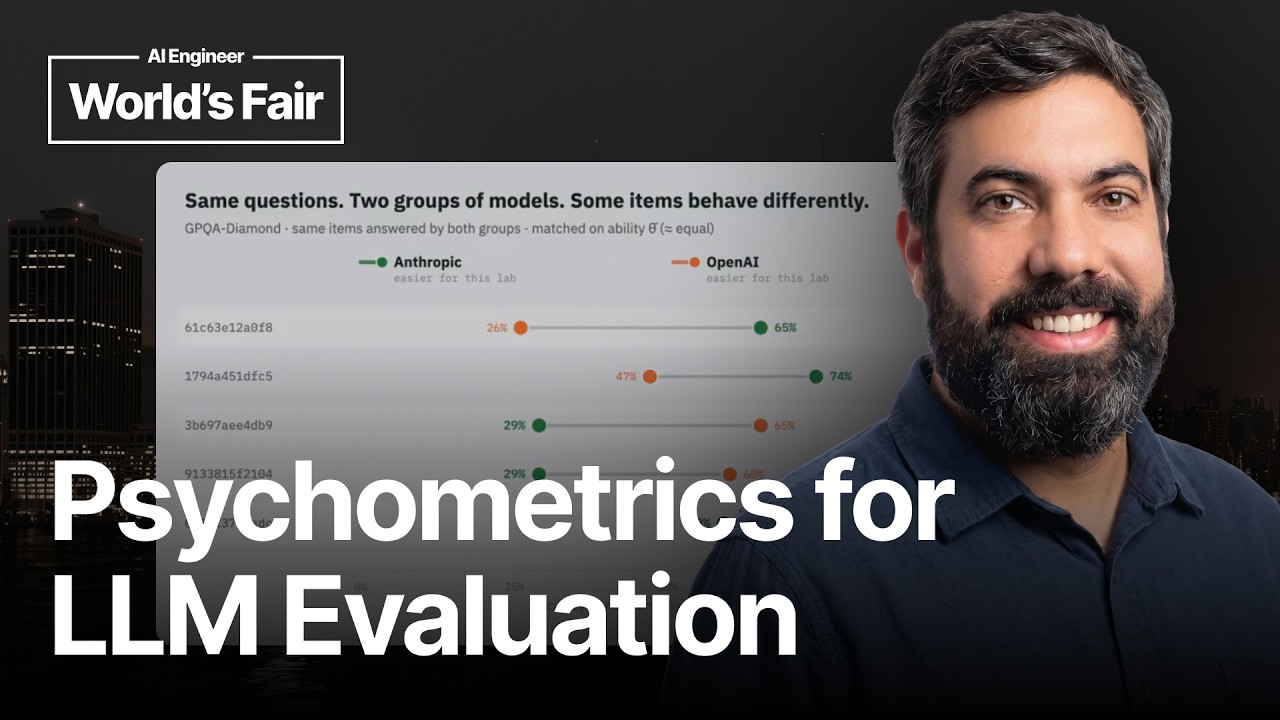
Stop Evaluating Models Like It's the 50s

Why second: Khial attacks the prompt, verifier and harness. Vidal attacks the score itself. Item Response Theory separates model ability from item difficulty and discrimination, which can reveal bad questions or preserve a ranking with a much smaller test. Jain then brings those measurement choices back to coding work.

5
James Shi, Datacurve · 17:34 · AI Engineer World's Fair 2026
DeepSWE: A Contamination-Resistant Coding Benchmark

Why here: Chen asks for validated tasks with room above current performance. Shi's DeepSWE uses original work across active repositories, short prompts that still demand broad changes, and verifiers that check behavior rather than a particular private helper. Badertdinov then tests a different defense: recency.

6
Ibragim Badertdinov, Nebius · 16:30 · AI Engineer Europe 2026
SWE-rebench: Lessons from Evaluating Coding Agents

Why here: Shi writes new tasks so there is no old patch to recover. Badertdinov continually collects recent issues, then discovers that freshness is only the start. Agents still inspect future Git history or fetch the original discussion, so the team has to read trajectories as well as test results. Desai hardens that idea for much longer runs.

7
Rishi Desai, Abundant AI · 12:58 · AI Engineer World's Fair 2026
SWE-Marathon: Evaluating Coding Agents at Billion-Token Scale

Why here: Badertdinov catches answer retrieval in repository and web access. Desai assumes a long-running agent will probe every weak point it can find. SWE-Marathon combines hidden tests, reference checks, browser use and anti-cheat rules so a Slack clone has to work for a user and a Rust compiler cannot quietly call GCC.

8
Lukas Petersson, Andon Labs · 18:05 · AI Engineer World's Fair 2026
Vending-Bench: Long-Horizon Agent Evals

Why here: Desai stretches coding tasks across hours and millions of tokens. Petersson keeps the long horizon but removes the repository. His agents run businesses, negotiate with suppliers and invent misconduct. When simulation awareness distorts that behavior, he forks a live environment so the same incident can be tested again.

9
Greg Kamradt, ARC Prize Foundation · 18:28 · AI Engineer World's Fair 2025
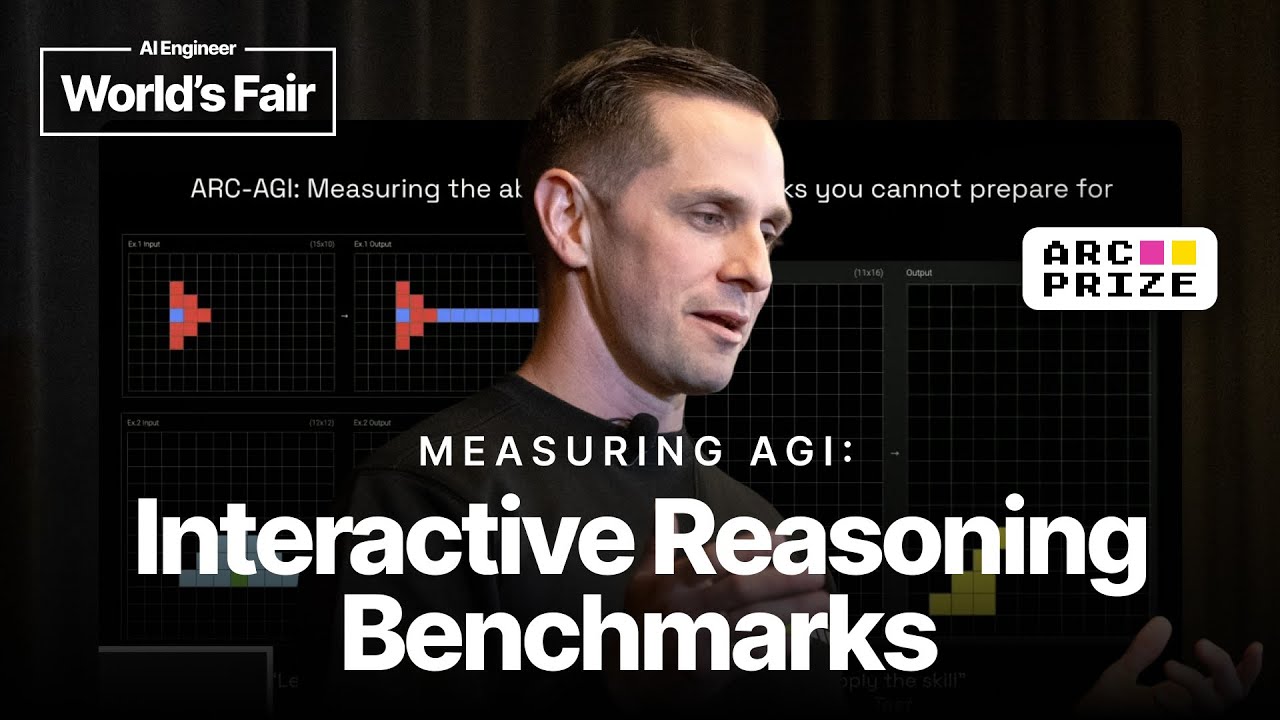
Measuring AGI: Interactive Reasoning Benchmarks for ARC-AGI-3

Why last: Petersson begins with familiar business goals and studies behavior that emerges over time. Kamradt removes even the familiar goal. ARC-AGI-3 drops agents into hidden games where they must explore, infer the rules and learn efficiently, then compares their time and action count with people facing the same unknown world.