Chat makes users wait, while citations make them verify the agent's work, so neither interface keeps the promise of saving time.
2
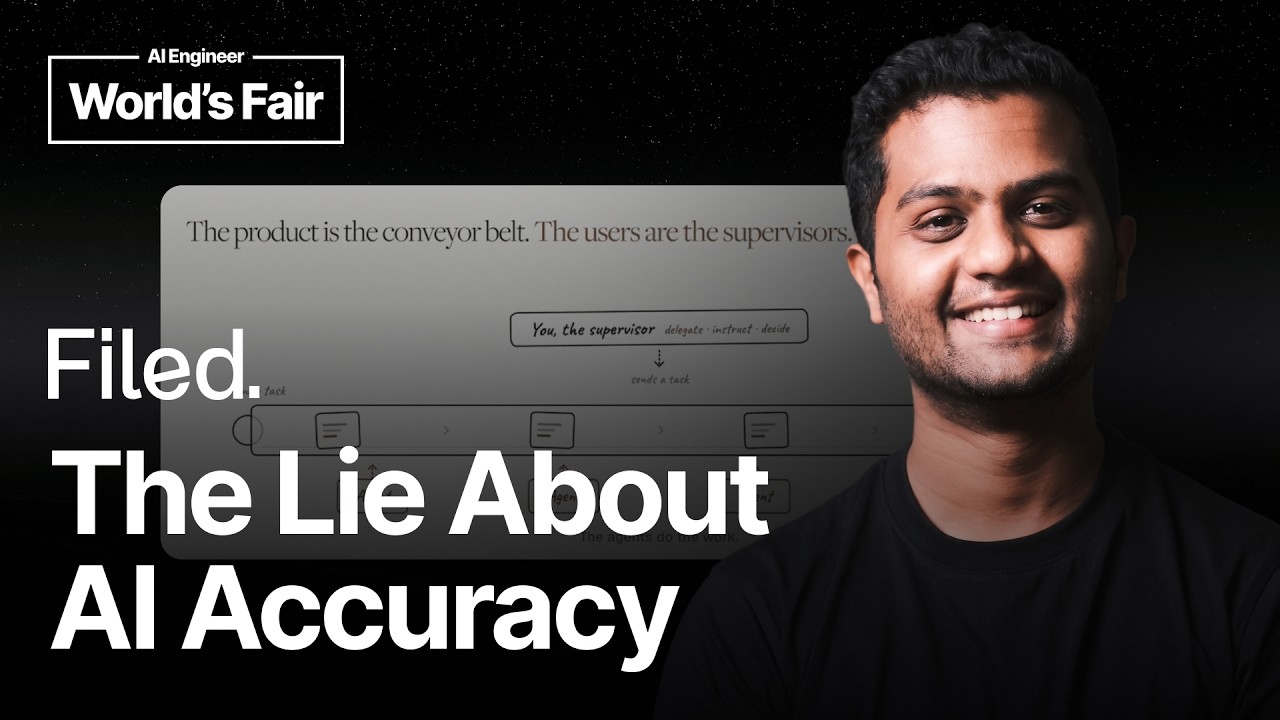
Vertical AI products should work like conveyor belts, with agents handling long-running tasks and users supervising, teaching, monitoring, and intervening.
3
Teams should measure completed human or agent sessions rather than time spent in the product, so weekly active sessions can rise while weekly active users fall.
Summary
Atul Ramachandran argues that chat and citations do not remove enough work from users of vertical AI products. Chat keeps the interaction synchronous, while citations return the burden of checking each result to the customer. He proposes treating an agentic product as a conveyor belt. Users delegate repeatable tasks that take more than an hour, agents run them in the background, and users supervise the process. The product needs ways to teach agents the user's preferred methods, monitor task progress and traces, and regain control when an agent makes an assumption or encounters a problem. Dangerous or irreversible work should come with an approved plan. Ramachandran also argues that existing product interfaces should remain available because users need confidence that they can take control. Finally, he recommends measuring weekly active sessions, including work completed without the user being present, rather than focusing mainly on weekly active users.
Ramachandran says chat is flexible, but it is synchronous. Users must stay in the interaction and wait for the agent's response. Citations can ground answers and reduce hallucinations, yet they also ask customers to review the work one item at a time. In healthcare, legal, and tax workflows, that checking becomes additional work. Customers were promised that agents would do the work while they slept, but chat and citation-based products still leave them responsible for verification.
Agentic products shift the bottleneck from users to delegated work
Ramachandran describes three product layers through a bank example. In a physical branch, employees performed tasks and employee count limited value. Online banking moved the work to users, so the number of users became the bottleneck. Agentic delegation moves work to AI agents, which can continue after a user leaves the platform. He compares the product to a conveyor belt: agents are the workers, the product is the belt and its infrastructure, and users supervise the work.
Long-running, repeatable tasks are the right work to delegate
The first design question is which tasks belong on the conveyor belt. Ramachandran recommends finding work that takes users more than a couple of hours, or more than an hour in Filed's tax workflow, and that is repeatable or partly repeatable across cases. Those tasks can become long-running background agents. The value comes from taking hours of work out of the user's hands, rather than making a short interaction slightly faster.
A background agent may get a task mostly completed, but its output will not solve the user's problem if it ignores that person's conventions and preferences. Ramachandran describes skills as the way to capture the last part of the work, including its quirks. Filed captures these skills automatically from product usage instead of requiring a separate skill-building interface. The product learns how users work and uses that knowledge in later tasks.
Monitoring gives users a view into background work
Long-running agents create many simultaneous tasks, so users need a way to see what is happening. Ramachandran suggests a task list that shows processing status and traces that explain how the agent produced its work. Filed traces each value an agent produces in a format users can inspect. This visibility helps users understand the process and locate the source of a result when something needs attention.
Control means pausing the work and taking the wheel
Users will not trust delegation unless they can intervene when an agent needs judgment or makes a mistake. Ramachandran describes a simple control loop: pause the belt, fix the problem, and start it again. Filed pauses when an agent is about to make an assumption, then lets the user respond to the conflict and explain how to proceed. The product should make users feel that they are taking the wheel, rather than abandoning control.
Agentic delegation does not remove the need for ordinary product interfaces. Users are more willing to delegate when they know they can return to the underlying workflow and take control. Ramachandran also recommends showing a plan before dangerous or irreversible actions. Before entering data into tax software that could erase existing data, Filed creates a plan for the customer to approve. The plan gives the user a decision point before the agent acts.
Completed sessions matter more than time in the product
Weekly active users measure products where people come in and do the work themselves. Ramachandran says this metric does not fit delegation. He proposes weekly active sessions, where a session is a task completed by a human or an agent, even when the user was absent. The intended pattern is for weekly active users to fall while weekly active sessions rise. That would indicate that customers trust the product to complete more work without their direct involvement.