AI product teams need to decide what to build and why it will win before focusing on industry launches.
2
A product's advantage comes from its own data, functionality, and understanding of unmet customer needs, rather than from AI alone.
3
Teams should connect unmet customer problems to novel AI capabilities and proprietary data.
Summary
Brian Balfour argues that recent AI launches do not matter unless a product team can answer one question: "What do I build and why will it win?" He says the advantage should come from things that belong uniquely to the company. These include its data, the functionality it builds, and its understanding of customer needs that remain unsolved. AI itself is not enough to create that advantage. Balfour returns to familiar product work: identifying unmet problems. The AI-specific work is finding capabilities that can solve those problems in new ways, then asking what proprietary data can power the solutions. The talk is a short reminder that choosing a model or following new launches does not answer the product strategy question. The product has to begin with a customer problem and have a reason it can win.
Balfour asks viewers to reflect on the previous 45 days and the many things that happened in the industry, including product launches. He then dismisses that activity as insufficient. None of it matters unless a team can answer, "What do I build and why will it win?" The question forces the team to define both the product and its reason for success. Following the pace of the industry does not provide that answer.
A product's advantage comes from what is uniquely its own
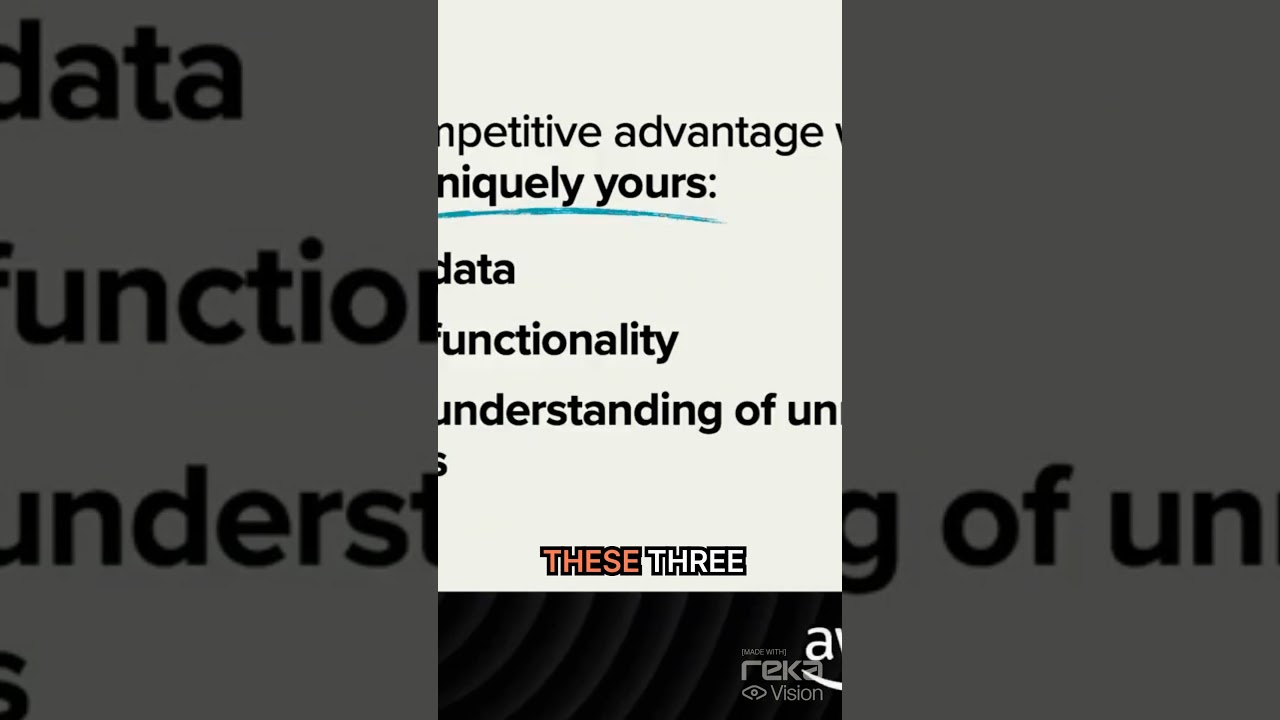
Balfour says competitive advantage comes from what is uniquely yours, rather than from AI itself. He names three sources: your data, your functionality, and your understanding of unmet customer needs. The model or AI capability is therefore only part of the product. A team needs assets and knowledge that other companies cannot simply copy by using the same general technology.
Product teams still need to find unmet customer problems
Balfour starts his recap with a familiar product question: what are the customer's unmet problems? He says this has always been part of product work. AI does not remove the need to understand what customers cannot currently solve. The product process still begins with a problem that matters to users, rather than with an AI capability looking for a use.
The second question is which AI capabilities can solve the unmet problems in novel ways. Balfour connects the technology choice to the customer problem. The point is not to add AI because it is available. The team should find a use of AI that changes how the problem can be solved and gives the resulting product a reason to exist.
Balfour's final question is what proprietary data can power the proposed solutions. Data becomes part of the product's advantage when it helps the team address the customer problem. His framework links three decisions: identify the unmet problem, choose an AI capability that can solve it in a new way, and determine what company-specific data can support that solution.
"Your competitive advantage will come from what is uniquely yours, these three things, your data, your functionality, and your understanding of unmet customer needs, not the AI itself."00:16
Who should watch
You are an AI product manager deciding which customer problem to build around.
Your team is tracking frequent AI launches but has not defined why its product can win.
You need a short framework for connecting customer problems, AI capabilities, and company-owned data.