An MCP server moves from a local demo to production when it has authentication, authorization, input validation, and controls against abuse.
2
Enterprise MCP products need SSO, lifecycle management, provisioning, fine-grained access controls, audit logs, and data loss prevention.
3
Authorization between asynchronous agents and MCP servers remains difficult because the protocol and supporting standards are still changing.
Summary
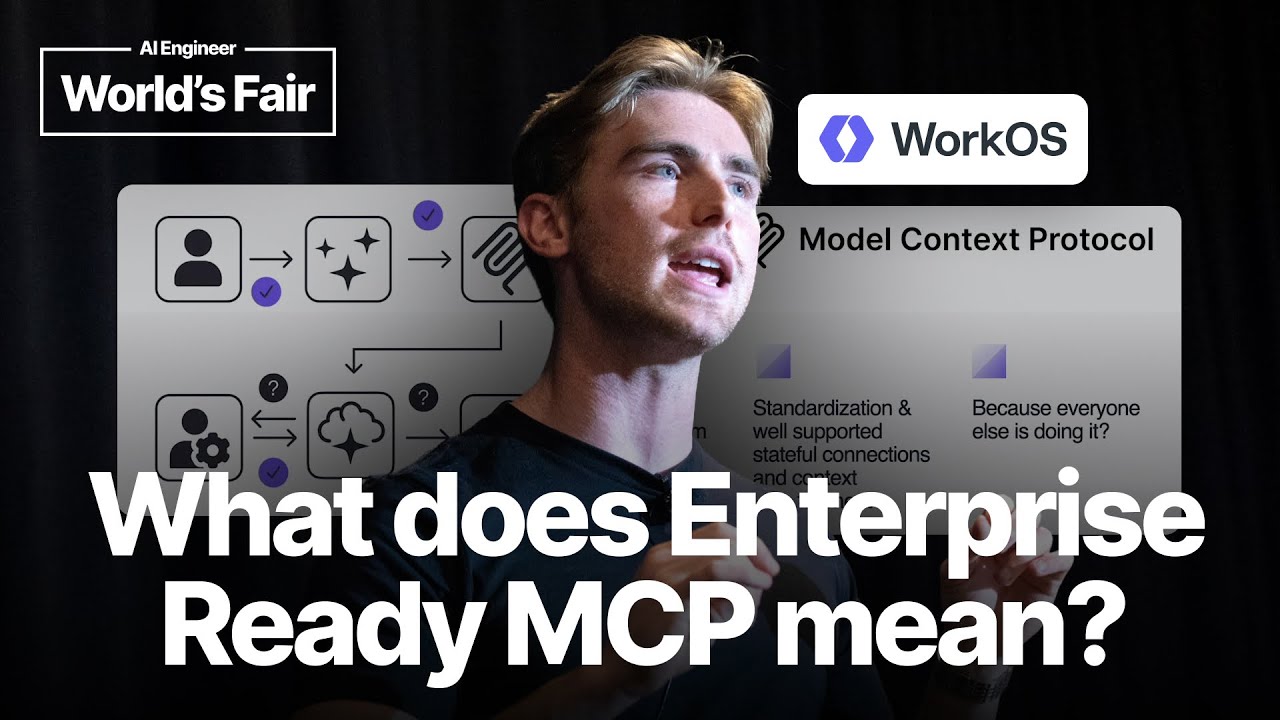
Tobin South explains how an MCP server grows from a local experiment into a workload that companies can safely use. He starts with a simple goat-feeding API and follows it through authentication, public hosting, payments, abuse prevention, enterprise sales, and a live MCP-powered shirt purchase. The basic engineering is familiar: users need to log in, permissions need to be scoped, inputs need validation, and public services need protection against bots and free-credit abuse. Enterprise customers add SSO, lifecycle management, provisioning, fine-grained access controls, audit logs, and data loss prevention. The harder problems involve agents. Asynchronous workloads need to call MCP servers without a human present, ask users for missing information, and pass authorization scopes between agents and services. South is direct that the answers are still developing. Cloud hosting is mostly solved, while identity, authorization, and oversight across agent systems remain the main obstacles.
MCP connects models to external tools and resources
South describes MCP as an interface between an AI system and an external resource. That resource might be a database, a computation, or a prompt. He also sketches more complicated deployments: an IT administrator can start a headless AI agent that uses secured internal tools, or a user can chat with an AI system that calls an MCP server which then invokes another AI workload. These arrangements create identity and permission questions because the request can pass through several systems before an action occurs.
MCP improves on ad hoc tool calling through shared conventions
South says ordinary tool use has been available for years but remains painful and prone to failure. MCP provides a growing ecosystem of tools, providers, and security tooling, while giving models a standard way to interact with them. Its stateful connection can support security, management, and context handling. He also points out that building an MCP server is easy and enjoyable, which explains why many current examples stop at a local service that proves an API connection without becoming useful to other people.
Authentication and authorization are the first production requirements
The next step after a local demo is to add authentication and authorization. South warns that an external API should not be left unauthenticated or without access controls. His goat example uses login, scoped permissions, and an administrator privilege so users cannot feed the goats excessively. For an internal deployment, a VPC and gateway can restrict access further. These controls are basic, but without them a server is not ready to expose beyond its creator or organization.
A public MCP server needs defenses against abuse and prompt attacks
When the goat service becomes public, South adds payment rails, free credits, and cloud hosting. Popularity then creates operational problems. Attackers can create accounts repeatedly to abuse free credits, so signup bot blocking is needed. The service also needs controls across its operations stack and input validation to reduce prompt injection risks. MCP servers dynamically register clients, which can flood developer or administrator dashboards with unexpected application records. Identity and management systems therefore need to account for MCP's registration behavior.
Selling MCP to enterprises requires the ordinary SaaS identity stack
South says enterprise adoption brings the familiar requirements of business software. A provider needs single sign-on, lifecycle management, provisioning, fine-grained access controls, and audit logs that can answer requests quickly. He cites Block and its Goose client as an example of internal provisioning for AI access and MCP servers. He expects companies to use SSO to provision employees into internal resources exposed through MCP. Regulations such as GDPR can also impose additional logging requirements for AI workloads.
Data loss prevention matters when people can chat with many servers
Enterprise MCP deployments also need data loss prevention. South is concerned that users may upload arbitrary material to MCP servers while chatting with many services. That creates a significant risk because the interaction can feel informal even though the server may connect to sensitive enterprise resources. An enterprise-ready server therefore needs controls over what data enters the system, alongside identity, permissions, and logging. The service must treat conversational access as a real path into company systems.
Headless agents and delegated authorization remain unresolved
South separates the easier connections from the open problems. A remote asynchronous workload may need to call an MCP server through dynamic client registration while still carrying the correct authorization. An agent may also need to contact a user when it lacks information. MCP's elicitation proposal addresses this by letting a model ask a person for additional input. Passing scopes and access controls between AI workloads is harder still, especially when an agent is expected to follow instructions through model behavior rather than enforceable permissions.
Cloud hosting is mostly available, while cross-agent access control is the hard part
South says cloud vendors can mostly handle hosting MCP workloads. The difficult part is authorization and access control when agents call other agents or services. A service account belonging to an AI workload must receive the right access, and the system must communicate those permissions across protocols and calls. He is explicit that the answers are not settled because MCP is developing quickly. An enterprise-ready design therefore needs to account for changing protocol support rather than assume today's patterns are final.
The shirt demo ties identity and oversight to an actual MCP action
South demonstrates the stack by selling a shirt through MCP. He adds the server to an AI editor with JSON, creates an account, and asks the system to buy a shirt. The agent requests a mailing address, uses the user's name, checks authorization, validates the request, and completes the purchase. South also mentions the signup bot blocker, which prevents people from abusing the offer. The demo shows that MCP can perform a real transaction, while authentication and validation remain part of the user flow.
"I think the authorization and access control element of this is the hardest part of putting this into external enterprise workloads."11:54
Who should watch
You are building an MCP server that currently works as a local demo and need to understand the identity and abuse controls required before making it public.
Your product must connect AI agents to internal enterprise systems and you need a checklist covering SSO, provisioning, permissions, audit logs, and data loss prevention.
You are designing asynchronous or multi-agent workflows and want to see where delegated authorization, user escalation, and dynamic client registration still cause problems.