Pack · 12 talks · 3h 41m to watch, 66 min to read

What AI actually costs

The AI bill keeps rising, and nobody can say which team, agent or run spent it. This pack starts there. Cisco's tokenomics work shows why engineers, managers and finance each need a different view of the same spend, and Token Ops traces it down to a single agent run. Once spend is visible, the price per token turns out to mislead: a cheaper model can cost more per finished task, and caching or reasoning effort can change the cost of one task tenfold or more. The middle talks spend a fixed budget better, inside one agent and across a team of them. Then the market moves under you: providers change prices, and self-hosting open models starts to pay. The last talk puts the whole token bill beside developer salaries.

1
Pratyusha Duvvuri, Cisco · 18:57 · AI Engineer NYC 2026
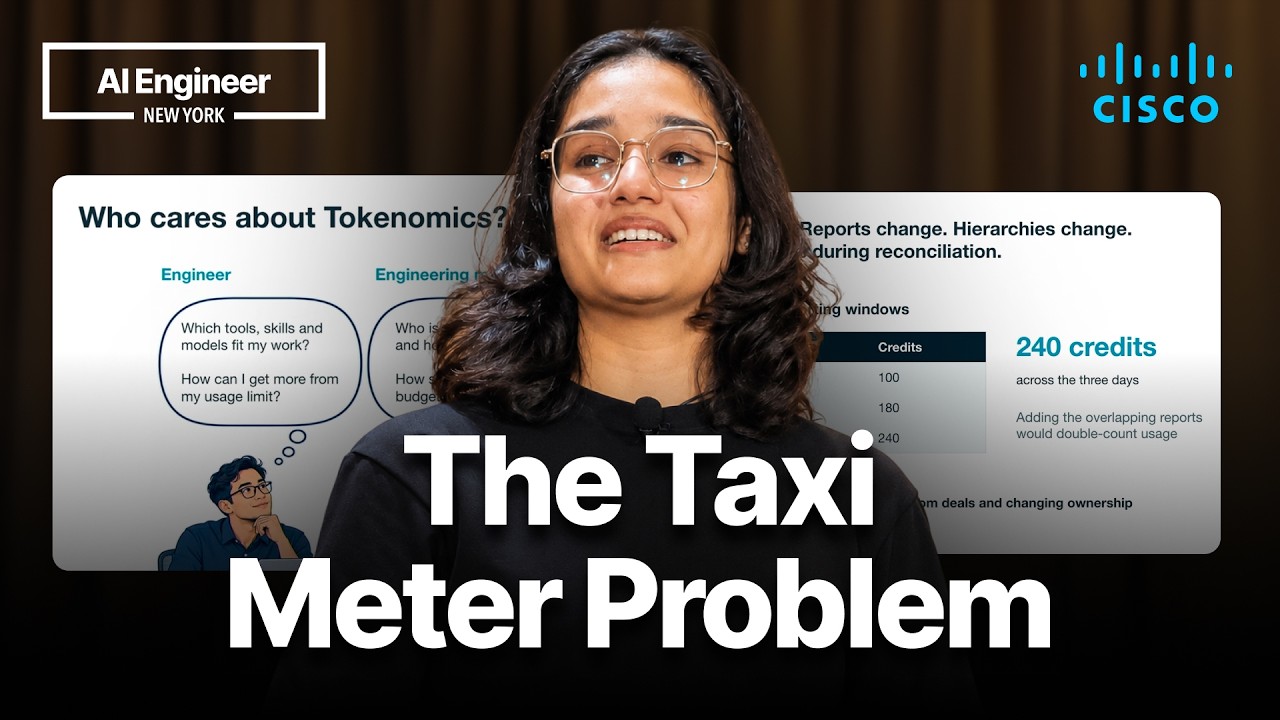
Why No One Agrees on What Their AI Tokens Cost

Why first: Duvvuri asked about 100 companies what tokenomics means and got answers ranging from knowing what tokens cost to return on investment for every team. The engineer, the engineering manager and the finance team each need a different answer from the same spend, and provider dashboards do not combine data across vendors. Pricing varies by contract, and a bill first shown as $100,000 can become $120,000 after reconciliation. Before anyone cuts the spend, someone has to agree what it is.

2
Tisha Chawla & Susheem Koul, Microsoft · 21:24
FinOps for AI Agents: Who Spent All the Tokens?

Why second: Duvvuri rolls spend up to teams and finance owners. Chawla and Koul go down to the single agent run, where loops, subagents and growing context create the bill. Token Ops attributes each model call to a run, applies budgets over time windows and prefers steering, such as asking a RAG tool for fewer chunks, over killing the run. Against simple throttling, their policies cut average spend by almost 78% while completion rose from 67% to roughly 96%.

3
Rayan Krishnan, Vals AI · 15:28 · AI Engineer NYC 2026
The Cheaper AI Model That Costs You More

Why here: Token Ops shows where the money goes. Krishnan shows why the price list is the wrong guide to where it should go. On a tax benchmark, a model with a lower listed price used more tokens, cost more per completed task and scored 3% lower. Vals AI then gave a team of 10 or 12 engineers unlimited tokens, watched them spend $1.5 million in a month, and used evaluations built from past GitHub pull requests to cut spending by about 90% without losing output.

4
Laurent Gil & Žilvinas Urbonas, Cast AI · 18:08 · AI Engineer World's Fair 2026
Stop Rationing Tokens: Let the Harness Pick the Model

Why here: Krishnan picks models by hand from his own evaluations. Gil puts that choice inside the coding harness and argues against the obvious response to a big bill, which is rationing tokens. Kimchi measures cost per completed task: in his example, Gemini 3 Flash at $3.5 per million tokens still cost $75 for the task. Over three months with 300 employees, Cast AI reports 2.5 times savings while token use rose 1.5 times.

5
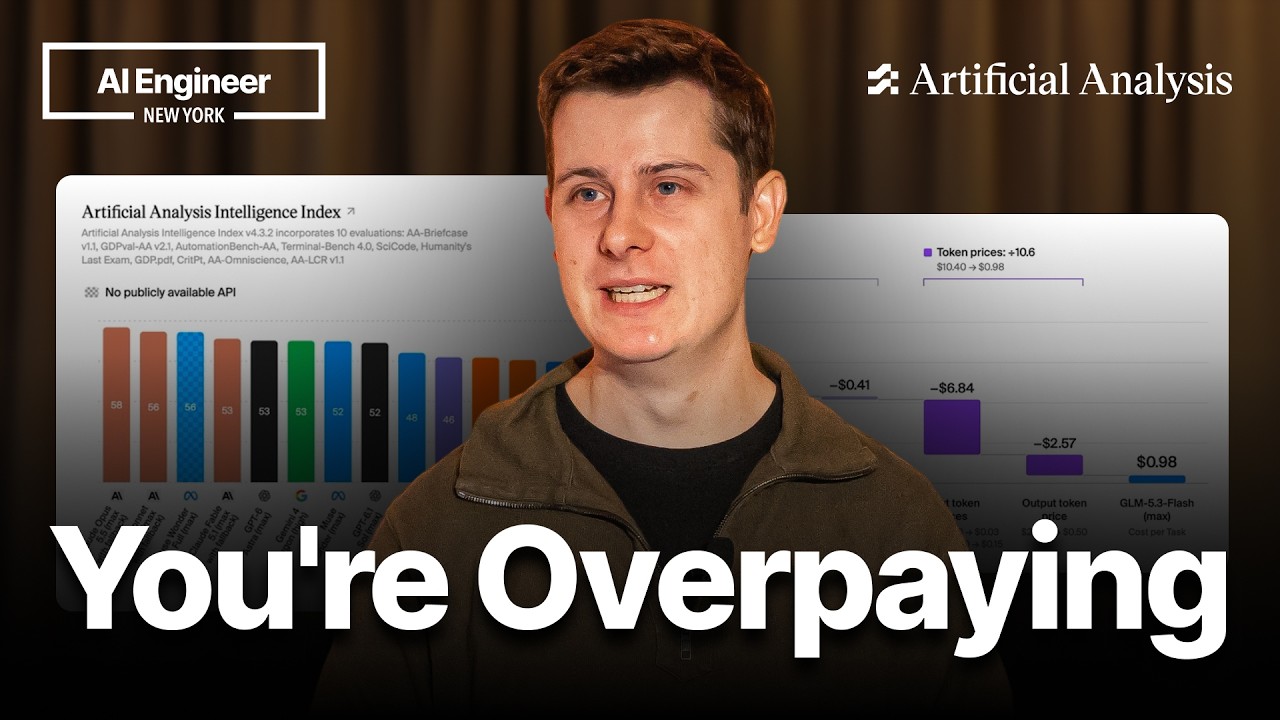
George Cameron, Artificial Analysis · 19:43 · AI Engineer NYC 2026
Without Caching, Your AI Agent Costs 10x More

Why here: Krishnan and Gil judge cost by the finished task. Cameron breaks one task's cost into the parts that drive it: input tokens, the share of them that are cache hits, and the number of turns. A long agent task on Opus averaged about $21 over 165 steps; with no cache hits, the same task cost more than $200. Raising reasoning effort moved it from about one dollar to $21, because it adds turns as well as thinking tokens.

6
Alvin Pane, OutRival · 11:12 · AI Engineer NYC 2026
How to Actually Tokenmaxx and Save Millions

Why here: Cameron names the levers. Pane pulls them in order at OutRival: trace every model call, structure prompts for prefix caching, shrink the prompt with DSPy and GEPA, then downsize the model. His caution is the release test. A cheaper candidate disagreed with production 18% of the time, but production disagreed with itself 7% of the time, so he ships only when the lower bound of a paired confidence interval on the net gain sits above zero.

7
Katelyn Lesse & Angela Jiang, Anthropic · 13:21 · AI Engineer World's Fair 2026
Tokens Should Have Jobs

Why here: Pane spends less on the same work. Lesse and Jiang keep the budget fixed and change what the tokens do. On a financial analysis benchmark at about 600,000 tokens, plain execution scores 76 and adding an adviser scores 89. When only a fully correct profit and loss statement counts, execution passes about 42% of runs, so one clean answer costs about 1.8 million tokens in expectation.

8
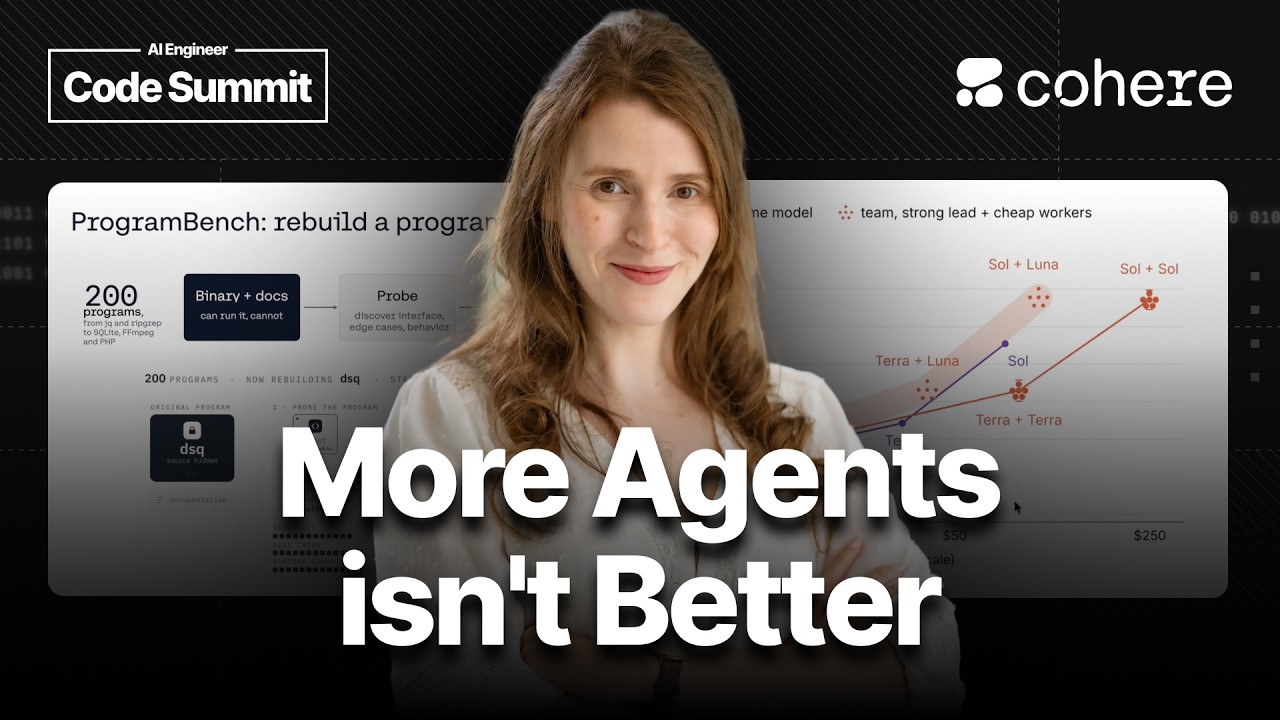
Nouha Dziri, Cohere · 31:22
How to Get Frontier Coding Results at 70% Lower Cost

Why here: Lesse and Jiang split one budget into jobs. Dziri asks the same question of a team of coding agents, which beat a solo agent on ProgramBench but cost four to seven times as much. Extra workers pay off at the stage that limits the task: planning on ProgramBench, implementation on Commit0. A strong lead with cheaper workers keeps nearly the same performance for about 60% less, because the lead sets the ceiling and the workers set the price.

9
Sarah Sachs, Notion · 23:55 · AI Engineer World's Fair 2026
Notion's Token Town

Why here: Dziri mixes expensive and cheap models inside one run. Sachs explains why that mix has to stay easy to change. A model upgrade can keep its token price while using three times as many output tokens, or cost 40% more while its predecessor is deprecated within four months. Notion treats its model supplier as a competitor, routes about 75% of traffic through its auto model, and sends deterministic jobs such as SQL queries to CPUs instead of an LLM.

10
Steven Latré, imec · 18:30 · AI Engineer NYC 2026
When Running Your Own AI Models Beats Paying for APIs

Why here: Sachs keeps open-weight models ready as a way to walk away from a vendor. Latré tests what walking away to your own hardware costs. Across more than a thousand SWE-bench Pro runs, hardware cost rose in steps rather than with accuracy: Qwen and DeepSeek performed similarly, but Qwen needed hardware four times more expensive to rent. Smaller systems need about 89% GPU utilization to beat API pricing, while an 8x B200 system breaks even at about 15%.

11
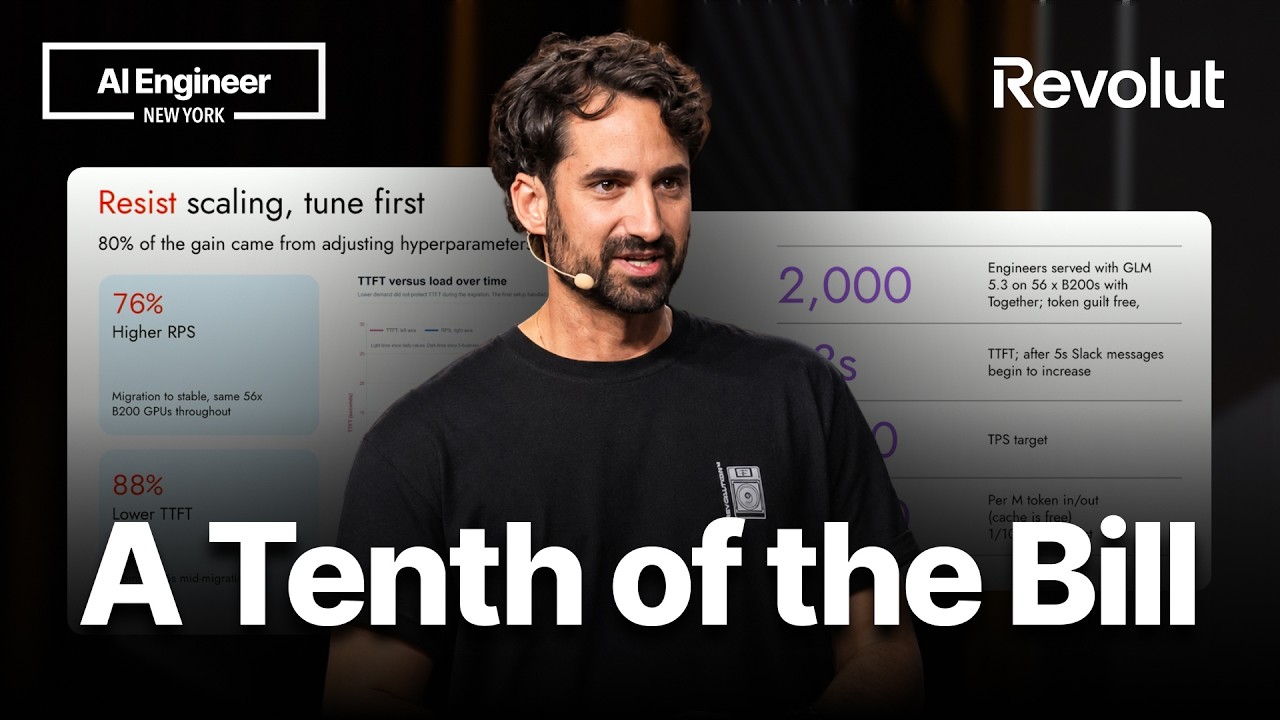
David Abitbol, Revolut · 11:47 · AI Engineer NYC 2026
How Revolut Cut AI Coding Costs 90% With Self-Hosted Open Models

Why here: Latré gives the break-even arithmetic. Abitbol shows one company past it. Revolut had imposed strict budget limits after engineers spent $1,000 to $10,000 a month on AI with limited return. Self-hosting GLM on about 56 B200 GPUs brought the blended token cost to 30 cents per million, about a tenth of its earlier Anthropic and OpenAI spend. With tokens no longer rationed, lead time improved about 70%, partly because engineers used AI for the work around coding.

12
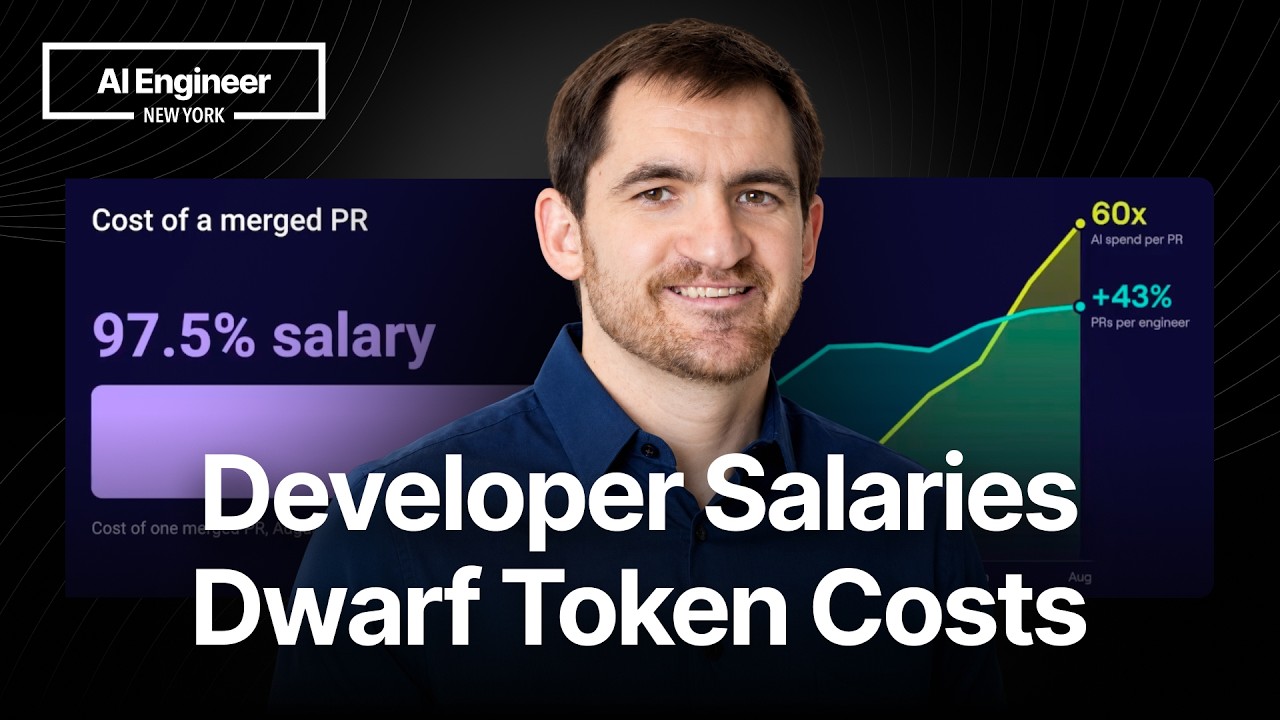
Steve Jamison, Jellyfish · 17:32 · AI Engineer NYC 2026
Tokens Are the Cheap Part

Why last: Gil and Abitbol both stopped rationing tokens. Jamison puts the token bill beside the larger number. In Jellyfish data, AI spending rose 60-fold while merged pull requests per engineer rose 43%, and salary still made up about 97.5% of the cost of a merged pull request, which fell 26%. He is careful that this does not prove causation. His advice is to track total cost per merged pull request, throughput and quality together before you cap anything.