AI Engineer will keep the World's Fair in Moscone at its current size next year while the team improves how it uses the existing space.
2
AI Engineer plans to expand through partner conferences and local organizers, using a model that lets communities run events under the AIE brand.
3
The conference chooses about 300 speakers from 2,200 applications, with prior talks and evidence of strong presentation quality helping applicants stand out.
Summary
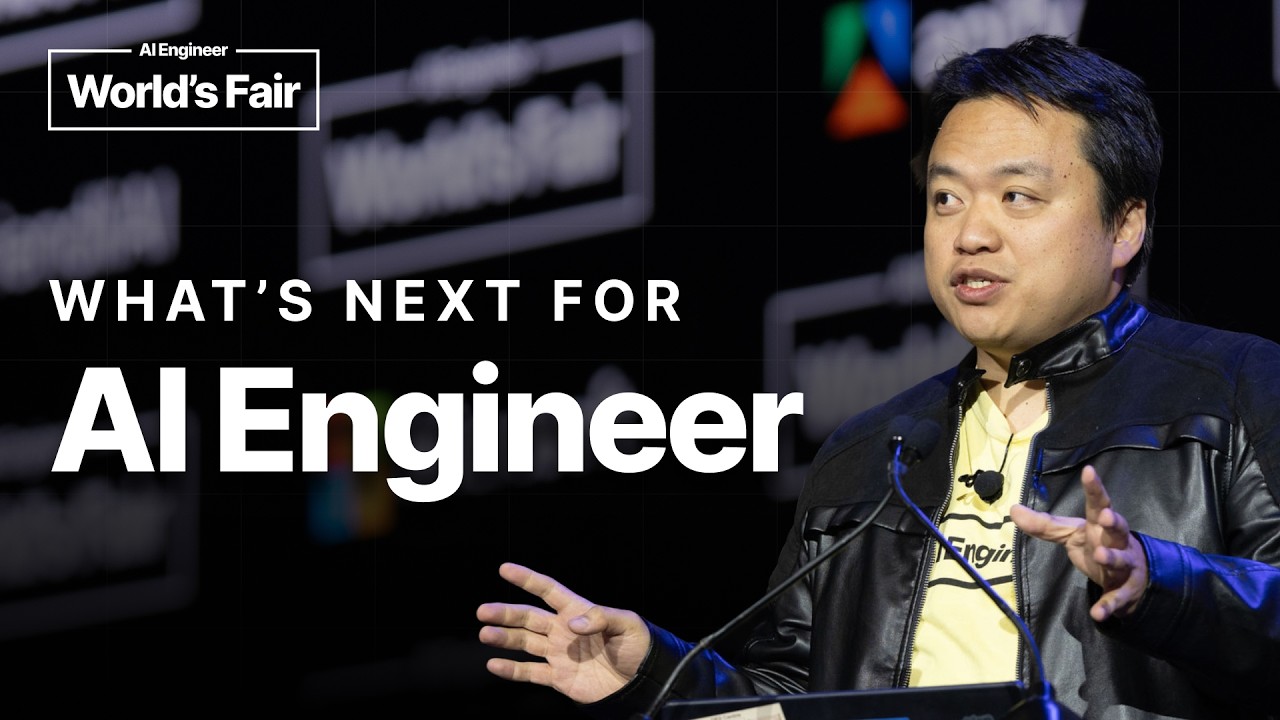
swyx answers attendee questions about the AI Engineer World's Fair and describes what will change next year. He plans to keep the San Francisco event at Moscone and at the same size, giving the team time to improve workshops, onboarding, Wi-Fi, scheduling, and the conference technology. He explains why AI safety is usually addressed through engineering work such as security, sandboxing, evaluations, and guardrails rather than through a dedicated existential-risk track. AIE is expanding internationally through partner conferences and local meetups, with India and Shanghai among the possibilities. swyx also explains how speakers are selected from 2,200 applications for about 300 places. Applicants should show distinctive work, connect it to a wider trend, and submit recordings that prove they can give a strong talk. The session ends with plans to expand academic poster sessions and bring more students and researchers into an industry audience.
AI safety fits AIE when it is tied to engineering work
swyx says AIE normally avoids a dedicated AI safety or existential-risk track because those sessions tend to focus on discussion, research, and theory rather than work engineers use directly. He points to security, sandboxing, guardrails, and evaluations as places where safety already appears in the programme. His example is that frontier evaluations and real-world testing can uncover alignment problems through concrete work. He argues that engineers who build systems and control how AI is used are already working on control structures, even when a session is not labelled X-risk.
The World's Fair is meant to give people room to wander
swyx rejects the idea that four expo days are automatically too many. The expo opened late on Monday, and some attendees instead asked why it was not open for the full day. He describes the World's Fair as different from a focused summit because visitors can buy a single-day ticket, walk around, and get a sense of the field. He also dislikes the pressure of rushing between talks. He is considering using more space for a content expo, where conversations can happen without every interaction being tied to a scheduled session.
AIE can grow internationally through partners and local organizers
AIE is working with partner conferences in places including Miami, Melbourne, Sydney, Paris, Singapore, and possibly Shanghai. For India, swyx says there is clear demand and that Bangalore is a likely starting point. AIE has partnerships lined up across about 40 countries, but the central team cannot run an event in every country. He compares the model to TED and TEDx: local organizers can build their own events while AIE protects a basic standard for meaningful conversations and technical content.
A local meetup should be regular, shared, and broader than talks
For local organizers, swyx recommends finding a consistent venue and time, such as the fourth Thursday of every month, and using a group of volunteers rather than doing everything alone. A meetup can include talks, social time, beer, or other activities. It does not need to become a small conference. Recording selected talks and publishing them can add polish, but he says event organization and publishing provide most of the value before extra infrastructure is added. He also recommends keeping the barrier to entry low, since organizers can always make the event more ambitious later.
The next World's Fair will stay at Moscone while the team improves operations
swyx says the next San Francisco World's Fair will use the same venue, size, and general setup. The team has now seen what the event looks like at Moscone, as have sponsors, speakers, attendees, and employees. He wants a year to improve how the existing space is used before expanding. He says AIE will stay in San Francisco for the foreseeable future and grow through geography and access to other countries instead of moving to a much larger local venue. The aim is to build a conference that can last for decades rather than pursue rapid growth.
Workshop registration and room capacity need a better system
An attendee says they spent much of Monday waiting for a workshop room and never got in. swyx accepts that AIE failed attendees and says pre-registration should have been available. A vendor was paid to provide the conference app, but the team could not make workshop registration work. He says the next version needs to help people know quickly when a room is full so they can choose another session. Recordings help with access after the event, but they do not solve the immediate problem of deciding where to go.
AIE is likely to replace its conference app with a web app
Attendees report crashes on Android, slow loading, lost scroll position, weak filtering, missing booth names and locations, unsynchronised web and mobile schedules, and the inability to save a session that has just started. swyx says the app comes from an external vendor and that he wants to remove it next year. He plans to control the event technology through a web app, using the open conference data and the requirements collected from this feedback session. He also wants to explore better matching between attendees, since he has seen networking matches work while chat features rarely get used.
Speaker applications are judged on distinctiveness and presentation proof
AIE received 2,200 applications for about 300 speaking places, including invited speakers. swyx says applicants improve their chances by showing work that is distinctive, connected to a broader trend, and useful to the audience. The review is not blind. Reviewers often watch previous talks, especially recordings from meetups or other conferences. A strong presentation can make the committee fight for an applicant, even if the recording has few views. He also says some slots go to leading companies or people who attract an audience, while other places go to applicants who can demonstrate that they will deliver a strong talk.
Academic posters give students and researchers a place inside the industry event
The 2026 World's Fair introduced academic poster sessions through a partnership with CAIS. swyx says AIE was created partly in response to academic conferences that require submissions months before an event, which can make the content outdated. He wants to bring academic work to an industry audience while keeping the event open enough that researchers can present work elsewhere too. For now, CAIS provided the selection process. He is considering a future peer-review process and possibly creating a publication venue. He also values the student presence because companies attending the World's Fair want to hire them.