Solo agent builders eventually recreate regression testing, monitoring, contract testing, staging, and audit trails without getting those controls by default.
2
The dangerous failure is a polished artifact that looks complete but violates a production rule, such as a voice constraint or verification requirement.
3
The first useful boundary is at the most expensive handoff, and it must block bad output instead of only logging a warning.
Summary
Sumaiya Shrabony uses her open-source, 19-skill Claude Code agent system as a case study for the operational controls agent builders tend to recreate badly. The system runs on a schedule, moves through research and content production, applies verification and review, and saves markdown artifacts. Its seven handoffs are possible points where output can become misleading. A live demo shows three failures: generic writing passes because the required sections exist, a precise statistic passes without a source, and a new hook duplicates an older idea. Guarded gates stop each artifact before it reaches the publish-ready folder. Shrabony recommends mapping every handoff, then adding a blocking boundary at the one where failure is most expensive. The controls include output shape checks, voice or domain rules, verification trails, deduplication, and audit records. Her argument is practical: agent systems need boring operational boundaries before builders add more agents.
Agent builders recreate software operations one failure at a time
Sumaiya Shrabony says people who build agents alone eventually recreate controls that software teams already know: regression tests after a downstream break, monitoring after a scheduled run fails silently, contract checks after a schema change, staging before an artifact is released, and audit trails after an investigation becomes necessary. Agent systems do not provide these guarantees by default, so each builder adds a separate workaround. The result is an operational system assembled from individual failures rather than designed up front.
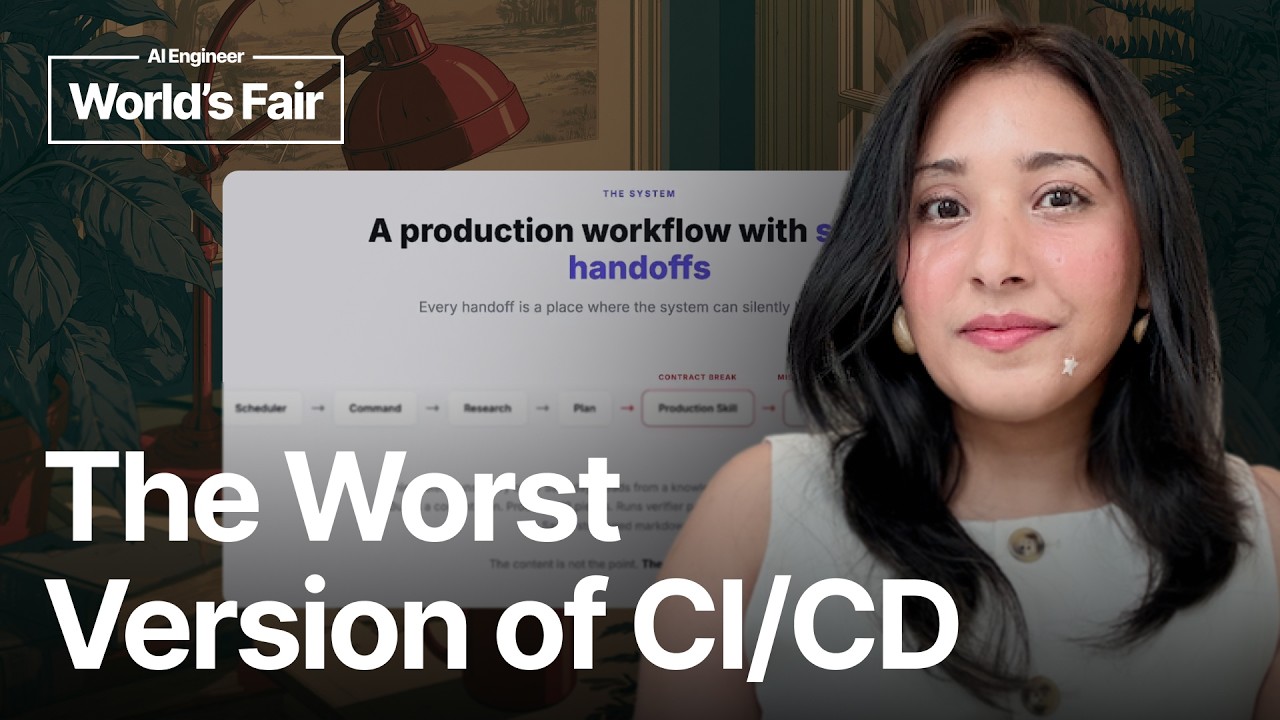
Her 19-skill content system runs every other Saturday. It reads from a knowledge vault, creates a research brief and content plan, produces 12 pieces, runs verification and review, deduplicates the results, and saves markdown files. The pipeline has seven handoffs, including scheduler to command, research to content, production to verifier, and reviewer to the output folder. Shrabony treats each arrow as a place where the system can lie, especially when one person is responsible for catching the problem after the run.
Polished artifacts are more dangerous than obviously bad output
A visibly bad result is easy to catch. The harder failure is an artifact that looks ready while breaking a production rule. Shrabony gives examples such as using the wrong voice pattern, making an unverified claim, repeating an old angle, or omitting required sections while still receiving a ready-to-publish label. She compares this with code being shipped because it compiled even though its tests never ran. Agent demos often hide this problem by showing only the happy path.
A voice contract can stop generic content before publication
In the first demo failure, the system produces familiar marketing language: "Unlock the power of AI adoption" and a claim that the approach will transform teams. The artifact contains all required sections and receives a ready status in knife mode, even though the writing does not match Shrabony's voice. Adding a boundary in guarded mode blocks it at the voice contract. The gate does not improve the prose; it prevents content that violates the system's stated voice from entering the publish-ready folder.
The second failure contains a specific statistic: teams with a clear semantic ownership model reduce AI rollout rework by 37 percent. The number sounds plausible, but the verification log is empty. Guarded mode blocks the artifact because claim-bearing content needs a verification trail. Shrabony's point applies beyond content systems. If an agent makes claims about data, users, or other subjects, a confident sentence is not evidence. The output needs a validation chain that connects the claim to a source.
Deduplication is a data boundary, not just a content preference
The third failure is technically coherent and appears new, but its opening angle is nearly identical to an item in the knowledge vault. Shrabony calls this a realistic solo-builder problem because every individual piece can look fine while the system repeatedly produces the same idea. In her example, guarded mode blocks the artifact at the data contract. The system also writes an audit record, so a later investigation can identify which gate failed and which contract was violated.
The first gate belongs at the most expensive handoff
Shrabony recommends mapping the path from input to final output and identifying every handoff where data can be corrupted. Builders do not need to fix all of them immediately. They should choose the handoff where failure costs the most, such as a public false claim, a schema break that affects three downstream skills, or a duplicate that damages audience trust. The boundary must block the artifact from moving forward. A warning-only log is a suggestion, not a gate.